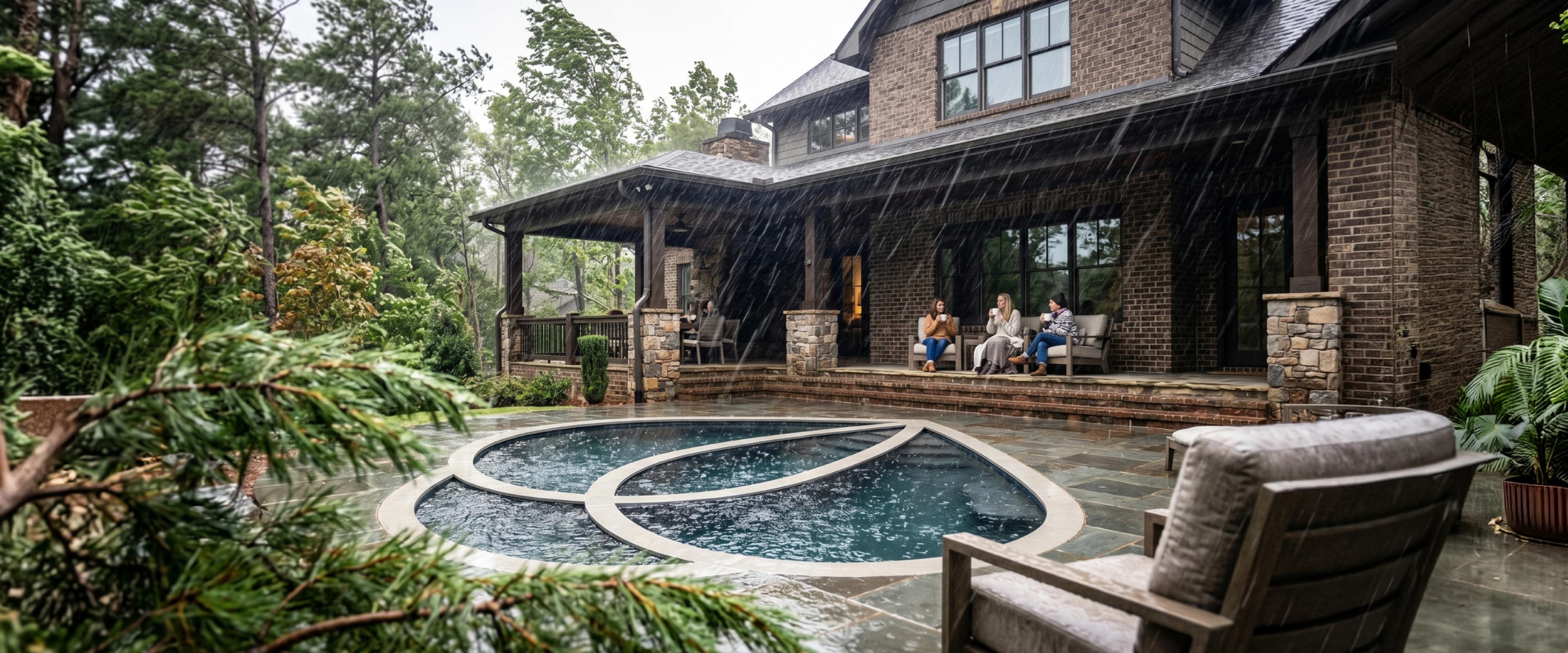
When most people picture hurricane damage, they see a coastline punctuated with boarded windows, evacuated beachfront communities and storm surge flooding waterfront streets. But 2025 delivered a sharp reminder: storms don’t stay at the shoreline.
Although the 2025 Atlantic hurricane season produced zero U.S. hurricane landfalls, catastrophic tropical flooding still killed more than 130 people in the Texas Hill Country. In many of the hardest-hit communities, less than 1% of households had flood insurance coverage.1 If you live inland, that number is worth your attention.
Hurricanes carry their water with them
High winds and flooding in beloved beachfront communities often keep public attention on the coast when a hurricane makes landfall. But hurricanes don’t lose their moisture at the shoreline. They carry enormous amounts of water inland, releasing it as they slow down. A storm that weakens to a tropical depression can still produce a foot or more of rain over areas hundreds of miles from where it came ashore.
Tropical Storm Chantal made landfall in South Carolina in 2025 and produced $500 million in economic losses — much of it from rainfall-driven flooding that reached well into the Carolinas.2 Hurricane Helene in 2024 caused catastrophic flooding in western North Carolina and Tennessee and at least 250 fatalities.3 In 2017, Hurricane Harvey stalled over southeast Texas and dropped up to 60 inches of rain in some areas.4 These weren’t coastal disasters that spilled inland. Inland flooding is a direct result of hurricane behavior.
The coverage gap most inland homeowners don’t know they have
A standard homeowners insurance policy does not cover flood damage. Flood damage, whether from storm surge, an overflowing river or rainfall that overwhelms drainage systems, requires a separate flood insurance policy.5
Most coastal homeowners know this, but many inland homeowners don’t think it applies to them, creating significant coverage gaps.
Flood insurance is available through the federal government’s National Flood Insurance Program (NFIP) or private insurers. One critical detail: NFIP typically takes 30 days to go into effect. If you want coverage before the season is underway, don’t wait until a named storm is approaching. Now is the time to explore your options.
Your flood risk may be higher than you think
Flood zones are updated regularly, and many areas that weren’t considered high-risk a decade ago are now more vulnerable due to changes in land development, drainage patterns and weather. Your address, whether you’re 50 miles inland or 500, may carry more exposure than an older map suggests.
Your local Highstreet agent understands the specific flood risk in your region. They can help you identify whether you’re in a flood zone, what coverage makes sense for your situation and what a policy would actually cost.
What inland homeowners should do now
You don’t need to live near the coast to act on this before hurricane season peaks:
- Check your flood zone. FEMA’s Flood Map Service Center (msc.fema.gov) lets you search by address.
- Review your coverage limits. Construction costs have risen significantly in recent years. If your home hasn’t been reassessed recently, your current coverage may fall short of what it would actually cost to rebuild.
- Don’t wait on the 30-day clock. A flood policy that starts in July offers no protection if a storm arrives in August. Act now.
- Talk to your Highstreet agent about flood insurance. Your standard homeowners policy does not cover it. Your agent can walk you through NFIP and private options.
Storm effects go far beyond the shoreline
Coastal communities plan for hurricane season. Inland communities often don’t. In 2025, the deadliest part of the season happened far from the coast, where many homeowners had no flood coverage.
Your Highstreet agent can help you understand what risks your region actually faces, what your current coverage leaves unprotected and what it takes to close the gap. Coastal or inland, the right coverage starts with one conversation. Contact your local Highstreet agent today.
Sources
1. Insurance Information Institute (2026). Record 2025 US Flooding Highlights Urgent Need for Flood Insurance and Resilience Measures.
2. Insurance Information Institute (2026). No U.S. Hurricane Landfalls, but 2025 Season Exposes Growing Preparedness Gaps.
3. National Hurricane Center (2024). Tropical Cyclone Report: Hurricane Helene. https://www.nhc.noaa.gov/data/tcr/AL092024_Helene.pdf
4. National Hurricane Center (2017). Tropical Cyclone Report: Hurricane Harvey. https://www.nhc.noaa.gov/data/tcr/AL092017_Harvey.pdf
5. Insurance Information Institute (2025). Spotlight on: Flood Insurance.