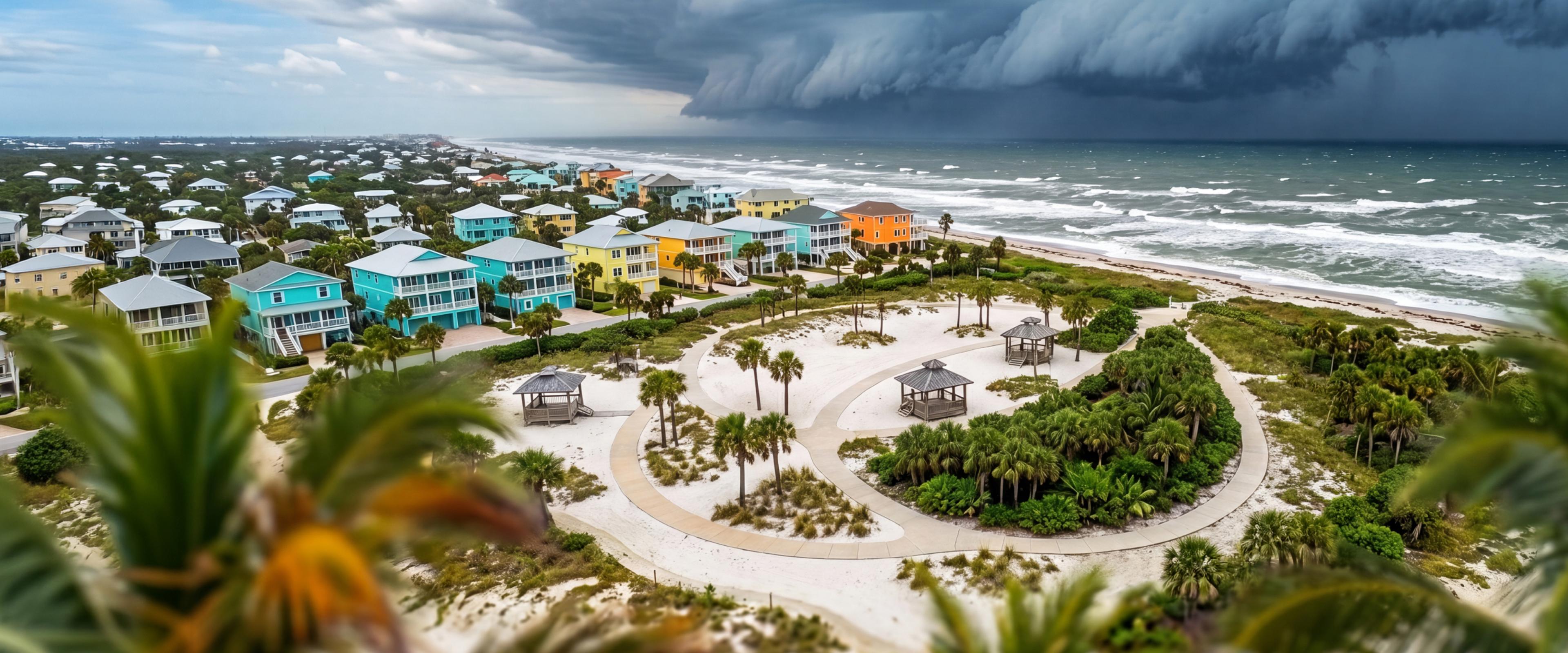
If you live on the coast, hurricane season is a date on the calendar, not a distant concern. From the Gulf Coast to the Carolinas, coastal homeowners face a combination of risks that can arrive quickly and cause lasting damage: storm surge, wind, flooding and the financial fallout that follows.
Preparation makes a real difference, and it starts well before a storm is named.
Know the risk
What 2025 taught us
The 2025 Atlantic hurricane season recorded zero U.S. hurricane landfalls — the first time in a decade. That didn’t mean a quiet year.
Four of five hurricanes that developed reached major status (Category 3 or higher), and three reached Category 5. Tropical Storm Chantal made landfall in South Carolina, causing $500 million in economic losses.1 Inland flooding proved to be the season’s most destructive force, with more than 130 fatalities in the Texas Hill Country alone. To compound the disaster, in many of the hardest-hit areas, less than 1% of households in some of the most affected communities had flood insurance coverage.2
The lesson for coastal homeowners: a quieter forecast doesn’t mean a safer season. One storm, wherever it makes landfall, can be catastrophic regardless of overall seasonal activity.
What experts predict for 2026
The National Oceanic and Atmospheric Administration (NOAA) forecasts a below-normal 2026 Atlantic hurricane season, with a 55% probability of below-normal activity, including 8–14 named storms, 3–6 hurricanes and 1–3 major hurricanes.3 The driving factor? El Niño conditions that are expected to develop and intensify during the season, which typically suppresses hurricane activity.4
But a below-normal forecast doesn’t mean below-normal risk. Every season produces storms capable of devastating coastal communities. Wind, storm surge and flooding can all result from a single Category 1 or 2 hurricane. The right preparation doesn’t change based on the forecast.
Get your home and insurance in shape now
Now is the time to review your coverage, before the season peaks and well before a storm is named. Here’s what coastal homeowners should address early:
- Understand what your homeowners policy covers — and what it doesn’t. A standard policy covers wind damage from a hurricane. It does not cover storm surge or flooding. For coastal properties, that gap can mean the difference between a covered loss and a financial crisis.5
- Know your hurricane deductible. In coastal states, hurricane deductibles are often higher than other homeowners policy deductibles and are typically a percentage of the policy limits. In some states, policyholders can pay a higher premium for a traditional dollar deductible instead, though in higher-risk areas, insurers may require a percentage deductible. Know your deductible amount before you need it.6
- Add flood insurance if you don’t already have it. Flood damage requires a separate policy, available through FEMA’s National Flood Insurance Program (NFIP) or private insurers. Since flooding can occur well inland from a hurricane’s heavy rainfall, homeowners away from the coast should still consider additional coverage. Talk to your local Highstreet agent, who understands the specific risks of your region, to make sure you have the right flood coverage.
- Review your coverage limits. Underinsurance is a common and costly mistake. Since construction costs have risen significantly in recent years, if your home hasn’t been reassessed, your current coverage limit may not reflect what it would actually cost to rebuild today.
- Ask about wind mitigation discounts. Hurricane-resistant upgrades like impact windows, storm shutters and reinforced roofing can qualify for premium reductions. Ask your Highstreet agent what improvements may lower your costs.7
Your Highstreet agent can walk you through all of these and help make sure your coverage is complete before the season gets underway.
When a storm is approaching
When a storm is in the forecast, time matters. Here are some critical items to consider as a storm approaches:
- Monitor the National Hurricane Center (hurricanes.gov) and sign up for local emergency alerts.
- Know your evacuation zone and have a clear plan, including where you’ll go and how you’ll get there.
- Photograph and document your home and belongings before the storm arrives to establish a baseline for any future claims.
- Secure outdoor furniture, shutters and any structures that could become projectiles in high winds.
- Board up windows or confirm storm shutters are properly installed.
- Have your insurance policy information and your Highstreet agent’s contact number accessible before you leave.
- Prepare a go-bag with medications, important documents, IDs, financial records and several days of supplies.
After the storm
Once the storm passes, remember: your safety comes first, and your documentation comes second.
- Safety first. Do not re-enter your home until local authorities confirm it is safe to do so.
- Document damage thoroughly. Before beginning cleanup or repairs, document all damage with photos and video.
- Keep all receipts for emergency repairs and temporary housing. Your policy’s Additional Living Expenses (ALE) coverage may reimburse these costs.
- Be cautious of post-storm contractor fraud. Unlicensed contractors often target affected neighborhoods after a disaster. Work only with licensed, reputable contractors and consult your agent before signing any repair agreements.
- Contact your Highstreet agent as soon as possible. Early notification helps speed the claims process and ensures nothing is missed.
One storm can change everything. One conversation can too.
Hurricane season means knowing what’s coming and having the right plan in place. Your Highstreet agent is ready to help you review your coverage, close any gaps and make sure you’re protected before the season gets underway.
Sources
1. Insurance Information Institute (2026). No U.S. Hurricane Landfalls, but 2025 Season Exposes Growing Preparedness Gaps.
2. Insurance Information Institute (2026). Record 2025 US Flooding Highlights Urgent Need for Flood Insurance and Resilience Measures.
3. National Oceanic and Atmospheric Administration (2026). NOAA Predicts Below-Normal 2026 Atlantic Hurricane Season.
4. Insurance Information Institute (2026). Triple-I Stresses Preparedness for 2026 Atlantic Hurricane Season.
5. Insurance Information Institute (2025). What Is Covered by Standard Homeowners Insurance?
6. Insurance Information Institute (2025). Understanding Your Insurance Deductibles.
7. Insurance Information Institute (2025). 12 Ways to Lower Your Homeowners Insurance Costs.